KaliIO offers AI and software development in four groups: AI and ML engineering (LLM apps, RAG, agents, chatbots and custom models), product engineering (web, mobile and SaaS), data, cloud and automation, and dedicated teams. Work usually starts with a discovery call and a short pilot, then scales once it proves its value.
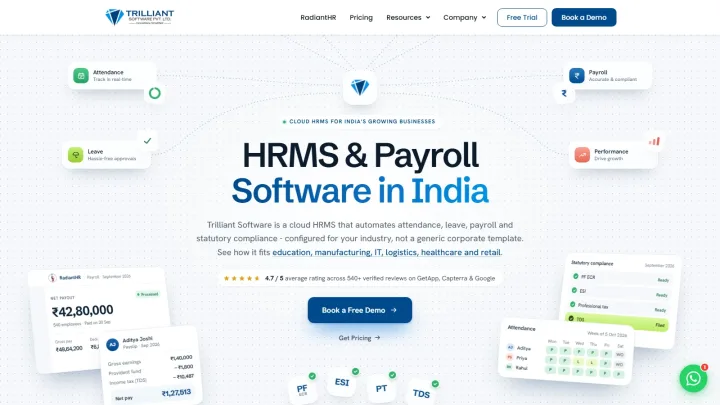
KaliIO built the full website for Trilliant Software, an HRMS and payroll SaaS in India, including SEO content pages: 364 HR glossary terms, 47 free HR tools and 10 guides.
HR glossary pages live
364
Published at /hr-glossary/ on trilliantsoftware.com, September 2026
Free HR tools live
47
27 letter generators, 11 calculators, 4 job-description pages, 5 policy and document tools; published at /tools/, October 2026
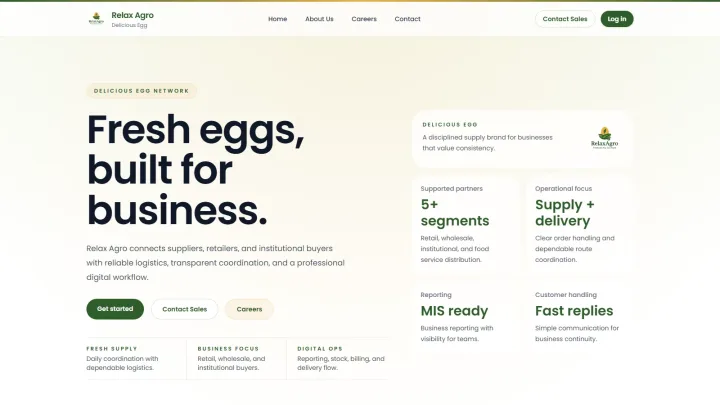
Relax Agro, an egg distribution business in India, moved orders, stock and deliveries from Excel and paper into one mobile and web app built by KaliIO.
It depends on scope, not on a rate card. The main cost drivers are how many workflows the system covers, how ready your data is, which systems it must connect to, the model and its usage costs, and your security or compliance needs. On a discovery call we go through them with you and agree the scope before building.
How long does it take to build an AI product?
It depends on scope and on how ready your data is. Every project moves through the same steps: discovery, prototype, pilot, production, then ongoing improvement. The prototype comes first, so you see the idea working on your own data early, and the timeline for each later step is agreed before that step starts.
Do we need a lot of data to use AI?
Not always. Applications built on large language models (LLMs) can often start with your existing documents and a few dozen good examples, because the model is already trained. Custom machine learning models, such as demand forecasting or visual inspection, usually need more labeled historical data. Discovery is where we check what you have against what the use case needs.
Can you work with our existing systems and data?
Yes. Most of the work is connecting AI to what you already run: databases, document stores, CRMs, ERPs and internal APIs. We build those integrations and add AI inside the workflows your team already uses, instead of asking people to switch to a new tool. Discovery maps which systems the first version needs to reach.
What is the difference between a prototype and a pilot?
A prototype shows the idea working on a sample of your data, usually without production integrations. A pilot puts a working version in front of a small group of real users, inside their actual workflow, and measures it against the success metrics agreed in discovery. The pilot result decides whether, and how, to move to production.
What do you need from us to get started?
A short description of the problem, an idea of what success looks like, and sample data or documents if you have them. It also helps to have one person who knows the workflow well and can answer questions during discovery. Book a discovery call and we will take it from there.
Bring the idea. We bring the intelligence.
Tell us what you want to build. On a discovery call we look at whether AI fits, and what a first version could do.